Andries van Eertvelt
1590 – 1652
In short
Andries van Eertvelt (1590–1652) was a Flemish Baroque painter from Antwerp who pioneered marine art in the Southern Netherlands. He is renowned for his dramatic seascapes and naval battle scenes, many of which remain key examples of early 17th‑century maritime painting.
Notable works

.jpg)

.jpg)
Early life Andries van Eertvelt was born in 1590 in Antwerp, a thriving commercial hub of the Southern Netherlands. Little is recorded about his family background, but the city’s bustling ports and shipyards provided a visual vocabulary that would later dominate his artistic output. He likely received his initial training in Antwerp’s guild system, where apprenticeships under established masters were the norm. The city’s artistic community, influenced by both local traditions and the influx of foreign merchants, offered a fertile ground for a young artist interested in the emerging genre of marine painting.
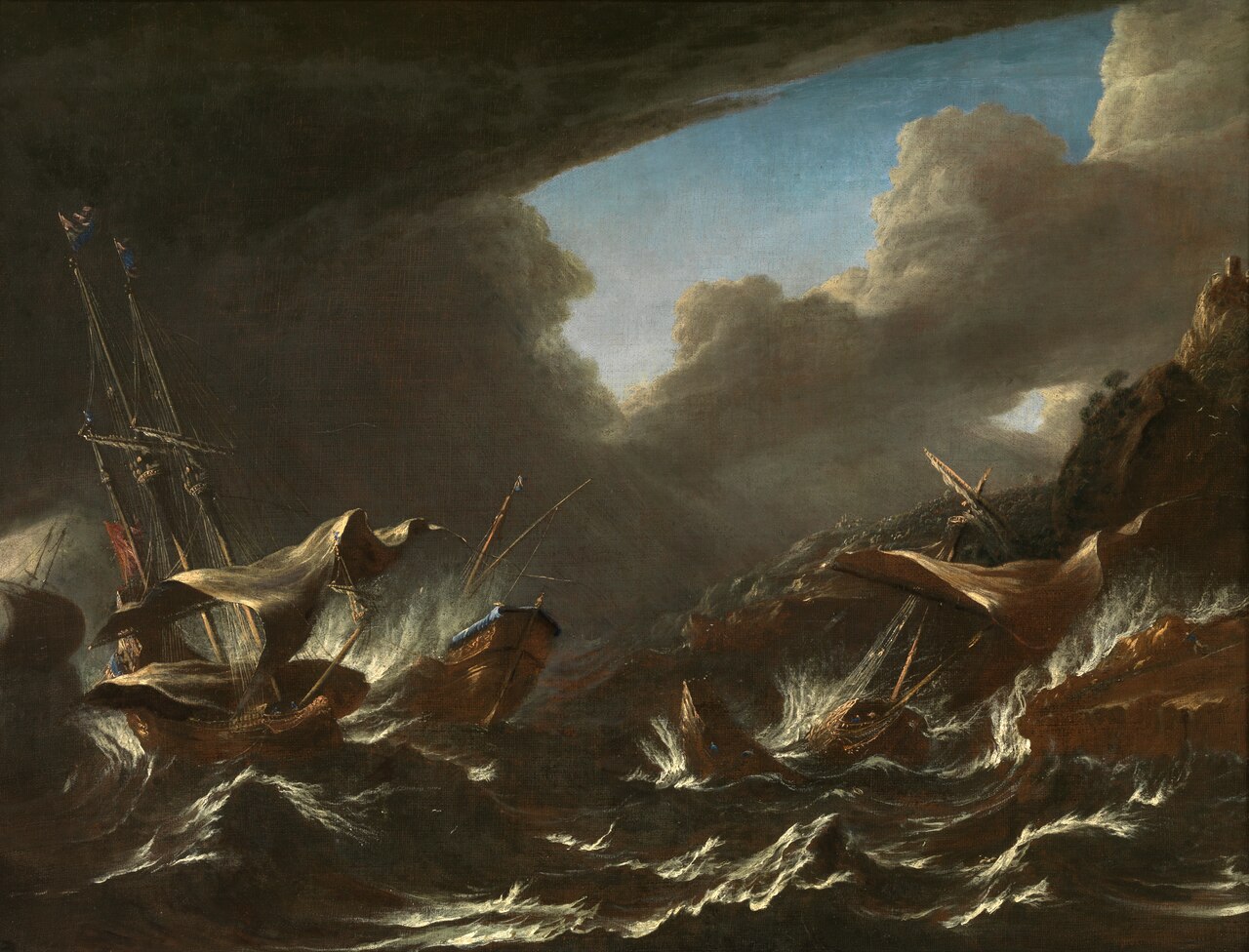
Career and style By the early 1610s van Eertvelt had established himself as a painter capable of handling both portraiture and large‑scale narrative scenes. His work reflects the Baroque sensibility of dramatic lighting, dynamic composition, and emotional intensity. Unlike many of his contemporaries who focused on religious or courtly subjects, van Eertvelt turned his attention to the sea, capturing the interplay of wind, water, and vessel. His paintings often juxtapose calm, sun‑lit horizons with turbulent, storm‑filled skies, creating a sense of tension that mirrors the mercantile uncertainties of Antwerp’s harbour.
Van Eertvelt’s style evolved through contact with Dutch marine painters such as Hendrick Vroom and later with the emerging Flemish school of seascape. He combined meticulous observation of ship rigging and naval architecture with a heightened atmospheric effect, using a palette dominated by deep blues, greys, and ochres. The artist’s compositions frequently place the viewer at a low viewpoint, emphasizing the scale of the ships and the sea’s vastness.
Signature techniques Van Eertvelt’s technical repertoire includes a precise draughtsmanship that renders ships with accurate hull lines and rigging details, a skill honed through his work as a draughtsman and engraver. He employed a layered glazing technique, applying thin washes of colour over a monochrome underdrawing to achieve depth and luminosity. In stormy scenes, he used impasto—thickly applied paint—to suggest the frothy crest of waves and the spray of sea spray, adding a tactile quality to the canvas.
His handling of light is particularly notable: a strong, directional light source—often the low sun—creates sharp highlights on sails and hulls, while the surrounding clouds and mist absorb softer tones. This chiaroscuro effect heightens the drama of naval confrontations and enhances the three‑dimensionality of the vessels.
Major works - **Portrait of Nicolaes van der Borght, Merchant of Antwerp (1630)** – This portrait demonstrates van Eertvelt’s versatility beyond marine subjects. The sitter, a prominent Antwerp merchant, is depicted with a calm, dignified bearing, set against a subdued background that hints at the city’s bustling trade. The careful rendering of fabric and the subtle play of light reflect the artist’s Baroque sensibility. - **The Battle of Lepanto (1623)** – One of van Eertvelt’s most celebrated historical compositions, this painting captures the 1571 clash between the Holy League and Ottoman fleets. The canvas is filled with a chaotic mass of ships, billowing sails, and exploding cannon fire. Van Eertvelt’s attention to the accurate depiction of galley and galleon designs underscores his knowledge of naval technology. - **Storm at Sea (1625)** – This work epitomises the artist’s mastery of atmospheric effects. A lone vessel battles towering waves under a dark, swirling sky. The contrast between the dark storm clouds and the brief glimpse of a breaking sunrise creates a dramatic tension that conveys both peril and hope. - **Ships in a Storm (1650)** – Produced near the end of his career, this painting shows a fleet struggling against a severe gale. Van Eertvelt’s use of impasto for the cresting waves and his careful rendering of the ships’ rigging convey a vivid sense of movement. The composition’s diagonal thrust leads the eye across the canvas, reinforcing the sense of relentless wind. - **Naval Battle (date unknown)** – Though the exact year is uncertain, this piece continues van Eertvelt’s exploration of naval warfare. It presents a clash of vessels with cannon smoke filling the air, and the artist’s skillful handling of perspective draws the viewer into the heart of the conflict.
Influence and legacy Andries van Eertvelt is recognised as one of the first Flemish painters to specialise in marine art, a genre that would later flourish in the works of artists such as Hendrik van Minderhout and the Van de Velde family. His pupils, including Pieter de Jode the Younger and Jacob van der Laemen, carried forward his approach to seascapes, disseminating his techniques across the Southern Netherlands.
Van Eertvelt’s paintings contributed to a broader cultural appreciation of the sea’s role in the economic and political life of the Low Countries. By documenting naval battles and the perils of maritime trade, his work provided a visual record that complemented contemporary written accounts. Modern scholars regard his oeuvre as a bridge between the early, documentary marine paintings of the late 16th century and the more romanticised seascapes of the later Baroque period.
Today, his works are held in major European collections, including the Royal Museum of Fine Arts Antwerp and the Rijksmuseum in Amsterdam. The enduring appeal of his dramatic seascapes lies in their combination of technical precision, narrative depth, and emotive power—qualities that continue to inspire both art historians and contemporary marine painters.
Frequently asked questions
Who was Andries van Eertvelt?
Andries van Eertvelt (1590–1652) was a Flemish Baroque painter from Antwerp who pioneered marine art in the Southern Netherlands.
What artistic movement and style is he associated with?
He worked within the Baroque movement, employing dramatic lighting, dynamic composition, and detailed ship rendering to create vivid seascapes and naval scenes.
What are his most famous works?
Key works include the Portrait of Nicolaes van der Borght (1630), The Battle of Lepanto (1623), Storm at Sea (1625), Ships in a Storm (1650), and various naval battle scenes.
Why does Andries van Eertvelt matter in art history?
He was among the first Flemish artists to focus on marine subjects, influencing later marine painters and providing a visual record of 17th‑century naval and commercial activity.
How can I recognise a van Eertvelt painting?
Look for meticulous ship details, a dramatic sky with strong contrasts, use of impasto for wave texture, and a Baroque sense of movement and atmosphere.